


Learn finance live online
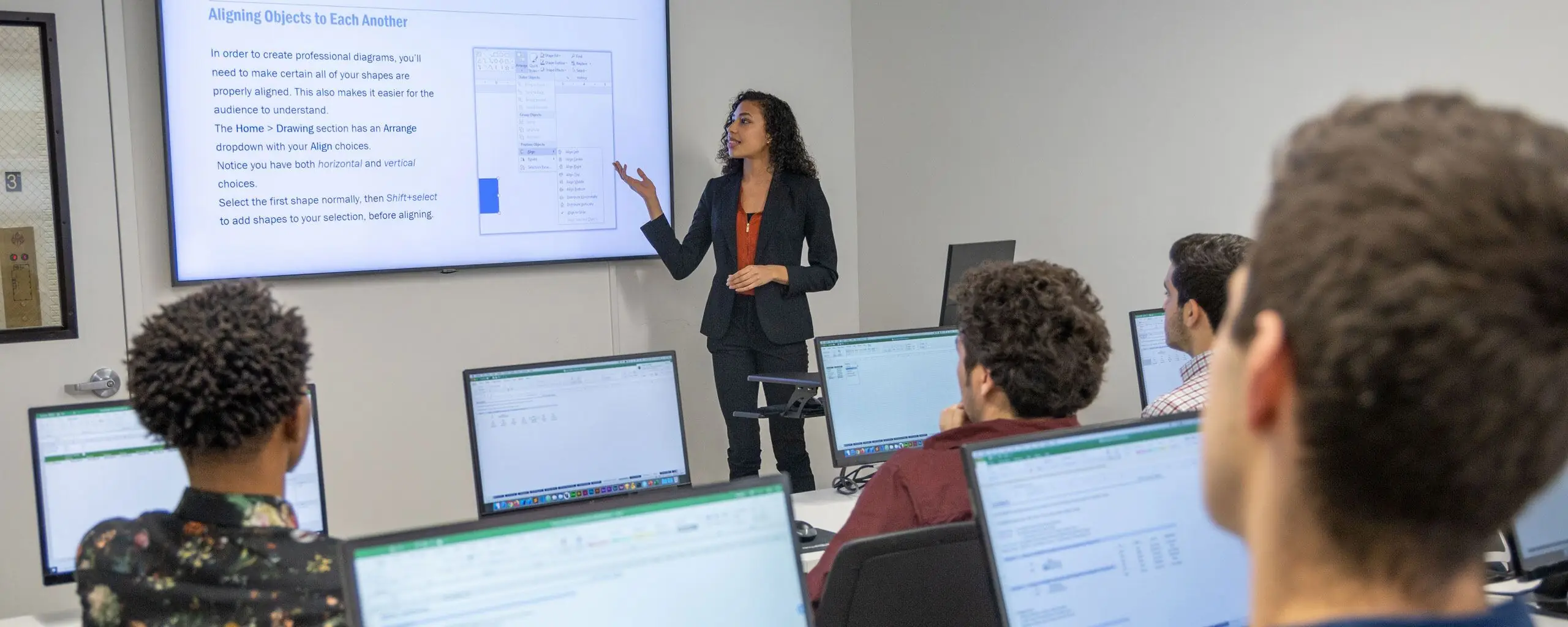
Live online finance classes let you work through financial concepts and spreadsheet exercises with an instructor from your own computer. The format is useful when you want scheduled instruction and opportunities to ask questions without traveling to a classroom.
Choose a course by the skill you need
- Choose Intro to Financial Accounting to learn how the main financial statements work and how they connect.
- Compare the Financial Accounting Bootcamp for a sequence that includes introductory and more advanced accounting topics.
- Choose the Financial Modeling Bootcamp if you have intermediate Excel skills and want to work on financial analysis and valuation.
- Compare the Financial Analyst Training Program if you need beginner and intermediate Excel before moving into finance and modeling.
Understand the prerequisites
The Financial Modeling Bootcamp expects spreadsheet proficiency equivalent to Intermediate Excel for Business, including lookup functions, PivotTables, and IF statements. Prior financial experience is helpful but is not required by that course. The Financial Analyst Training Program includes the core Excel foundation at the start.
Review the outline before choosing a program. Accounting, corporate finance, investing, and financial modeling overlap, but they answer different questions. A course on interpreting statements is not the same as a course focused on building an Excel valuation model.
Practice with financial information
Financial accounting helps you interpret reported results, while modeling uses assumptions to explore possible outcomes. In both cases, keep track of where information comes from and how calculations are constructed. A well-organized workbook makes it easier to inspect formulas and explain a result.
When comparing scenarios, distinguish observed facts from estimates. Changes in revenue growth, expenses, or other inputs can materially change a model's output. Understanding that sensitivity is more useful than treating a single number as certain.
Prepare for remote instruction
Check the required software, computer setup, session dates, and time zone before enrolling. Plan for a reliable internet connection and a workspace where you can follow the instructor while completing exercises. Live online classes meet at scheduled times.
Review the selected program's materials, recording access, support, and retake policies. These details should come from the course page rather than from general assumptions about online learning.
Choose live instruction or another format deliberately
Self-paced programs use a different schedule from live online classes, and support varies by course. If you need to ask questions in real time or benefit from a regular class meeting, live instruction may suit your goals. If your schedule is the main constraint, compare the specific self-paced options and their support arrangements.
Finance courses develop particular skills. Professional requirements vary by role and employer, so use the curriculum to judge how a course fits into your broader learning or career plan.