


Learn SQL for database analysis
SQL lets you work with information stored in relational databases. You can retrieve selected records, combine related tables, and summarize data to answer business questions. The same foundations support analysis, reporting, and many software workflows.
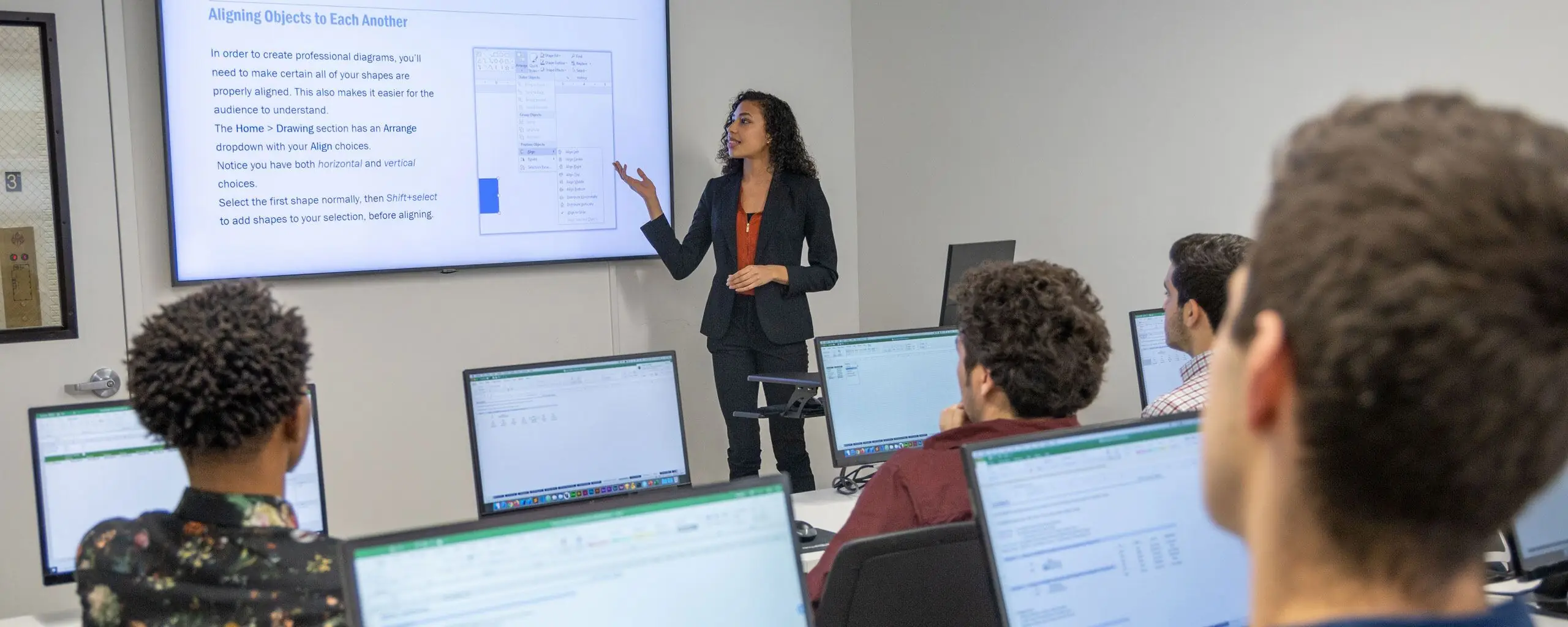
NYIM offers SQL training in Manhattan and live online, with beginner through advanced options. Choose a bootcamp for a coordinated sequence or compare individual levels if you already have experience.
Choose your database system
The SQL Bootcamp teaches querying with Microsoft SQL Server. The SQL Bootcamp (PostgreSQL) covers PostgreSQL. Both develop core SQL skills, but they use different software and have differences in syntax and functions. If your workplace uses one of these systems, that is a useful starting point for your choice.
A relational database stores information in tables made up of rows and columns. Related tables can be connected through keys. SQL queries specify the information you want and the conditions it should satisfy.
Progress through the SQL Server levels
- SQL Server Level I introduces database concepts and the foundations of retrieving information with SQL.
- SQL Server Level II develops more complex querying skills and builds on the first level.
- SQL Server Level III covers advanced techniques. Review its outline and prerequisites to check whether it is the appropriate next step.
- The SQL Bootcamp combines all three SQL Server levels. PostgreSQL also has its own bootcamp and individual levels in the course listings.
Use SQL to answer clear questions
A query often starts with selecting columns and filtering rows. Joins bring related information together, and grouping lets you summarize records. Aggregate functions such as SUM, COUNT, and AVG calculate totals, counts, and averages.
More advanced work can include subqueries and reusable query logic. The goal is to produce a result that answers the question correctly, not simply to write a query that runs. Check for duplicates, missing values, and joins that unexpectedly change the number of rows.
How SQL fits with Excel and dashboards
SQL retrieves and summarizes data; spreadsheets and visualization tools can support further analysis and communication. The Data Analytics Technologies Bootcamp combines SQL with Excel and Tableau for students who want to develop skills across that workflow.
Understanding the underlying data makes a report easier to trust. Be able to explain which records are included, how tables are related, and what a calculated value represents before presenting the result.
Prepare for classroom or live online training
Check your course's dates, location, software requirements, and computer setup instructions. Live online students use their own equipment and should complete the required setup before class. Classroom students should review the facilities information for the scheduled Manhattan session.
NYIM also offers private training for teams. Describe your database system, the experience of the participants, and the queries or reports they need to create so the training can be matched to those needs.
Build skills for your role
SQL is useful in analytics, business intelligence, development, and database work. These roles require different combinations of knowledge. Querying skills are a foundation; tasks such as database architecture, security, and application development can require additional training and experience.