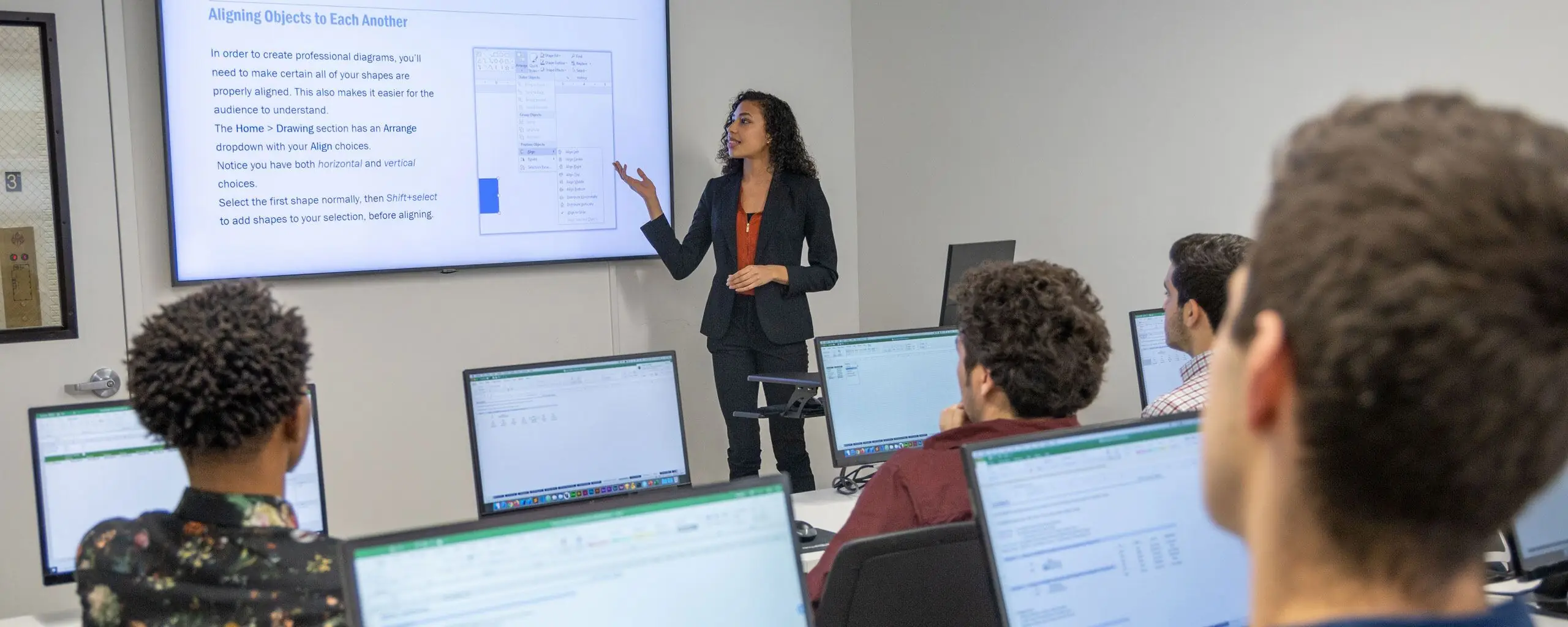


Choose data analytics training for the work you want to do
Data analytics turns raw information into findings that help people make decisions. The work can include cleaning a spreadsheet, querying a database, comparing business results, and presenting a dashboard. A useful course choice starts with the tools you use and the questions you need to answer.
NYIM offers hands-on data training in Manhattan and live online. Compare the courses listed on this page for current dates, delivery options, prerequisites, and tuition. If you are searching for a class near you outside New York City, live online instruction lets you join without traveling to a NYIM classroom.
Start with a tool or combine several
- Excel for Business Bootcamp covers spreadsheet skills from formulas and formatting through PivotTables and advanced analysis. It is a practical starting point for people who work with business data in Excel.
- SQL Bootcamp focuses on retrieving and summarizing information stored in relational databases. Learn to write queries, filter results, join tables, and use aggregate functions.
- Tableau Bootcamp develops visual analysis and dashboard skills. Learn to connect data, build charts, and make your findings easier for other people to explore.
- Power BI Bootcamp introduces Microsoft's reporting and visualization tools, including Power Query, relationships between tables, and calculations for reports.
- Data Analytics Technologies Bootcamp combines Excel, SQL, and Tableau for students who want a coordinated foundation across spreadsheet analysis, databases, and visualization.
When Python and AI belong in your learning plan
If your goals include programming, repeatable data processing, or more advanced analysis, consider Python for Data Science Bootcamp. Python can help you clean and explore datasets with reusable code. The broader Data Analytics & AI Certificate includes Excel, SQL, Tableau, Python, machine learning, and AI application work. Review its curriculum and time commitment before choosing a longer program.
AI tools can assist with code, formulas, and exploratory work, but their output still needs checking. Understanding the source data, choosing a suitable method, and explaining the limits of a result remain essential analytical skills.
Match the class to your experience
Start with a beginner class if you are learning a tool for the first time. If you already use it at work, compare the advanced topics and prerequisites before enrolling. A focused course can address a specific task, while a multi-course program provides a broader sequence and more opportunities to practice.
For live online study, plan to work on your own computer and review the course's setup instructions before the first session. For classroom study, confirm the Manhattan location and schedule shown for the course. Teams can also ask NYIM about training tailored to their reporting workflows.
Apply the skills beyond the classroom
Analysts use these tools in finance, operations, marketing, and many other functions. The useful result is not simply a chart or query: it is an answer that other people can understand and use. Practice explaining where the data came from, how you checked it, and what your analysis does and does not show.
